
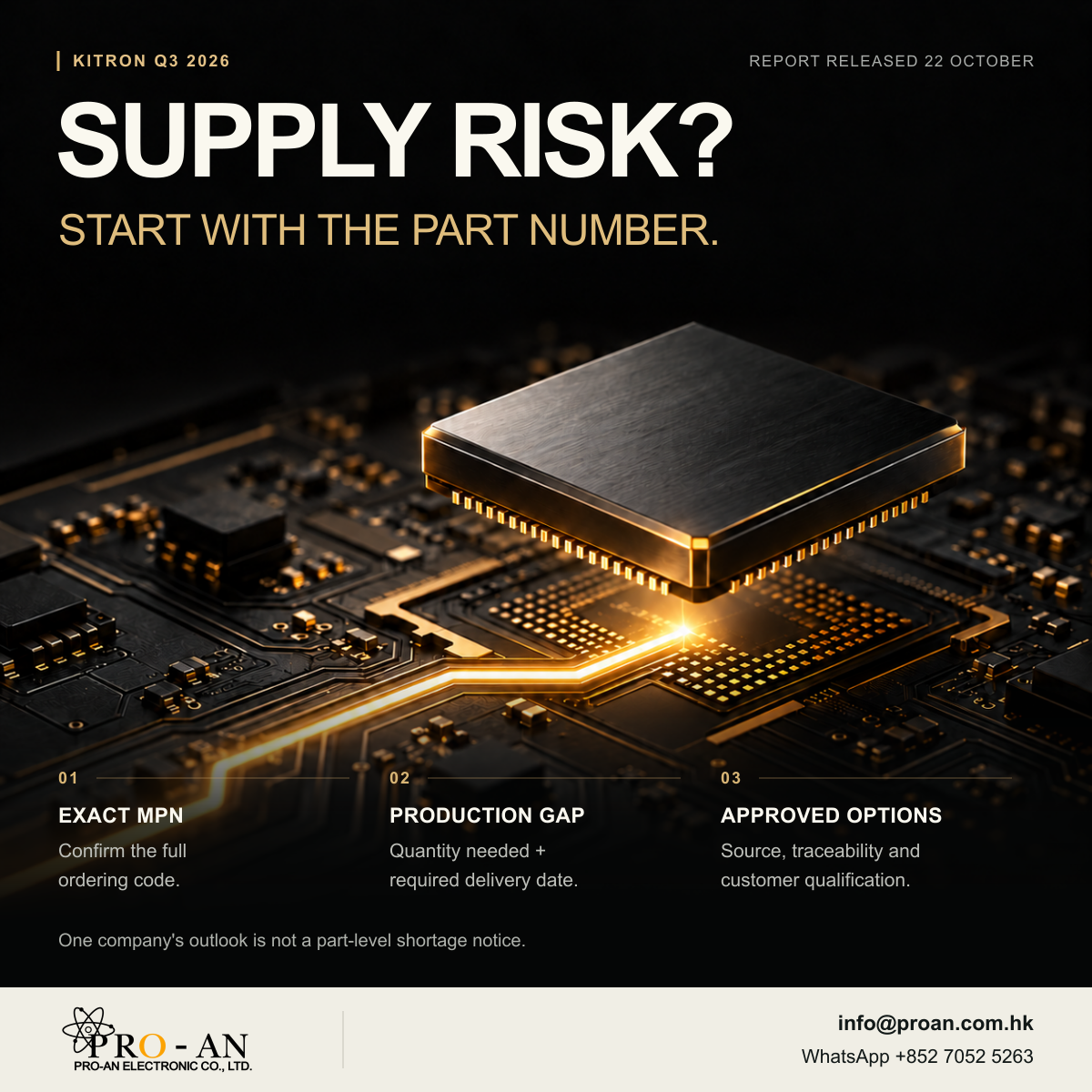
供應鏈展望偏緊,正是逐個料號核對 BOM 的理由。
Kitron 於 2026 年 10 月 22 日發佈的第三季報告中,描述供應鏈壓力持續。管理層預期市場限制會延續至 2027 年。
對採購團隊來說,實用的下一步是把這個公司層面的展望,轉化為三項實際核對:
1. 確認完整原廠料號,包括訂購後綴。
2. 找出實際生產缺口:數量及所需交貨日期。
3. 協定可接受的貨源及可追溯性;任何替代料仍需客戶認證。
這只是一家 EMS 公司的展望,並不代表任何個別元件出現短缺、加價或交期承諾。
你目前的生產排程中,哪一個料號需要特別留意?
資料來源:Kitron 2026 年第三季報告,2026 年 10 月 22 日發佈;見 CEO 評論〈Working through a tight supply chain〉。2027 年的預期屬管理層展望,並非確定結果。
圖片
英文原文(以原文為準)
A tight supply-chain outlook is a reason to check your BOM — part by part.
In its Q3 report released on 22 October 2026, Kitron described continued supply-chain pressure. Management expects market constraints to extend into 2027.
For a purchasing team, the useful next step is to turn that company-level outlook into three practical checks:
1. Confirm the full manufacturer part number, including the ordering suffix.
2. Identify the actual production shortfall: quantity and required delivery date.
3. Agree acceptable sources and traceability; any alternative still needs the customer's qualification.
This is one EMS company's outlook. It does not establish a shortage, price increase or delivery commitment for any particular component.
Which specific part number needs attention in your current production schedule?
Email: info@proan.com.hk
WhatsApp: +852 7052 5263
#ElectronicsManufacturing #ComponentSourcing #SupplyChain #BOM